Turning Off the Dub: Why Millions of Americans Are Watching Foreign Shows the 'Hard Way' on Purpose
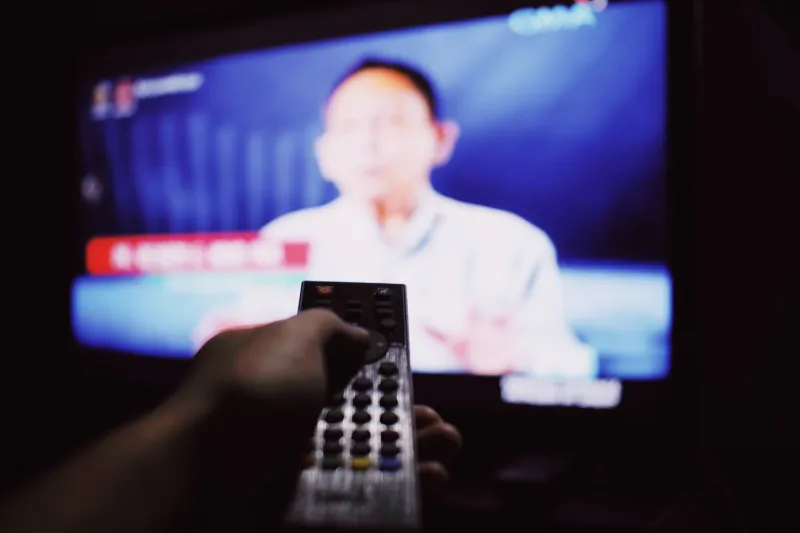
There's a button most people don't touch. It's right there in the audio settings — English dub, clean and easy, no reading required. And yet, a growing chunk of American viewers is scrolling right past it, settling in with the original Korean, Spanish, Turkish, or French audio, and letting the subtitles roll.
This isn't a fringe thing anymore. It's a trend that's showing up in streaming data, in social media discourse, and in the way people talk about TV at dinner tables and in group chats. The question worth asking isn't just why — it's what this shift tells us about what Americans actually want from their screens right now.
The Numbers Don't Lie (But They Do Surprise)
Netflix has been pretty open about the fact that non-English content has exploded in popularity across its platform. Squid Game made headlines as a cultural phenomenon, but behind it was a quieter data story: a significant portion of its American audience watched it in Korean with subtitles, even after an English dub became available.
Similar patterns have played out with Money Heist, Dark, Lupin, and more recently with Turkish dramas that have quietly built enormous fanbases in American cities. Industry analysts have noted that when dubs are offered alongside original audio, the split in preferences among engaged viewers — the ones who finish whole seasons, who rewatch, who post about shows online — often skews toward the original language version.
That's not what anyone in the entertainment industry expected five years ago.
"It Just Feels More Real"
Ask people why they prefer subtitles and you'll hear variations of the same thing over and over: it feels more authentic. That word — authentic — does a lot of heavy lifting here.
What viewers seem to be responding to is the emotional texture that gets lost in translation when you swap out the original voice performance. Dubbing, even when it's done well, creates a kind of uncanny valley effect. The mouth movements don't quite sync. The emotional beats land slightly off. The cultural specificity in how a character delivers a line — the hesitation, the humor, the weight — gets smoothed over into something that sounds like every other TV show you've already seen.
Cultural critics have pointed out that this is actually a pretty sophisticated viewing preference. Choosing subtitles means accepting a layer of work — your eyes are doing double duty — because the payoff feels worth it. Viewers are essentially saying: I'd rather put in the effort than accept a flattened version of this story.
Hollywood's Uncomfortable Mirror
Here's the part that gets interesting for the American entertainment industry. When viewers actively seek out foreign content over English-language originals — not just because an algorithm surfaced it, but because they went looking — that's a signal about something deeper than novelty.
A lot of the conversation in entertainment media right now centers on "content fatigue." American prestige TV has been running a certain playbook for a while: the antihero, the sprawling ensemble, the shocking twist, the awards-season drama with muted color grading and a lot of meaningful silences. That formula isn't broken, exactly. But it's familiar in a way that's starting to feel like a ceiling.
Foreign shows often operate under different production constraints, different storytelling traditions, different ideas about pacing and character and what a satisfying ending even looks like. Korean dramas have a different relationship with emotional directness. Scandinavian crime shows are built on a particular kind of atmospheric dread that doesn't map onto American genre conventions. Turkish historical epics carry a weight of cultural mythology that feels genuinely foreign — and genuinely compelling — to American eyes.
Viewers aren't just chasing novelty. They're chasing difference. And that's a harder thing for Hollywood to simply copy.
The Social Layer
There's also something happening on the social side that's worth paying attention to. Watching a foreign show in its original language has become, in certain communities, a marker of taste and seriousness. It signals that you're not a passive consumer — you're engaged, you're curious, you're willing to do the work.
TikTok and Instagram have accelerated this. Clips from Korean dramas, Turkish series, and French thrillers circulate with subtitles already baked in. By the time someone actually sits down to watch the full show, they've already been primed to experience it in its original form. The subtitle isn't a barrier anymore — it's part of the aesthetic.
There's also a community aspect. Fan communities built around foreign-language shows tend to be deeply invested in the source culture. They learn phrases, they research filming locations, they debate translation choices. That level of engagement is hard to replicate with a dubbed version of the same content, where the cultural specificity has already been partially stripped away.
What This Means Going Forward
The studios and streaming platforms are watching all of this very carefully. Netflix has dramatically increased its investment in non-English original content. Other platforms are following. But the more interesting question is whether Hollywood itself will adapt — not just by acquiring foreign IP and remaking it, but by rethinking what American storytelling can look like when it has genuine global competition.
Some writers and directors are already paying attention to what's working internationally and why. Others are doubling down on the formulas that have always worked domestically. The audience, meanwhile, is quietly voting with its attention.
The subtitle rebellion isn't really about subtitles. It's about a generation of viewers who grew up with the entire world in their pockets, who have been exposed to more storytelling traditions than any previous generation of Americans, and who have developed tastes that don't stop at the border. They're not rejecting American entertainment wholesale. They're just no longer willing to accept it as the only option — or even the best one.
That's a genuinely new situation. And nobody's entirely sure yet what it's going to produce.