Wired on Subtitles: What Happens to Your Brain When You Grow Up on Foreign Shows
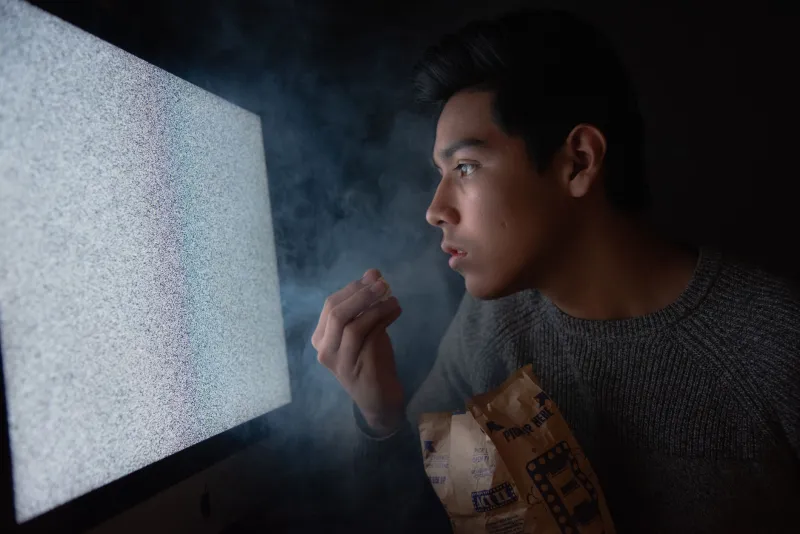
There's a moment a lot of Gen Z kids describe the same way. You're maybe fourteen, maybe sixteen, deep into your third consecutive episode of something — a Korean thriller, a Spanish teen drama, a Turkish romance that your algorithm somehow found for you. And at some point, you stop reading the subtitles as translation. You just... understand the feeling. Not the words. The feeling.
That moment? Linguists have a name for it. And neuroscientists are increasingly interested in what it means.
It's Not Just Vibes — There's Real Science Here
Dr. Ellen Bialystok, a cognitive psychologist at York University who has spent decades studying bilingualism, has long argued that consistent exposure to more than one language — even passive exposure — changes the way the brain allocates attention. It trains the mind to toggle. To hold two systems at once without collapsing either one.
What nobody quite predicted was that a generation raised on Netflix, Viki, and Crunchyroll would stumble into this cognitive workout completely by accident.
Research published in journals like Bilingualism: Language and Cognition suggests that even people who consume foreign-language media without actively studying the language show measurable changes in how they process ambiguity — in language, in social situations, in humor. The brain, it turns out, doesn't really distinguish between "learning" and "absorbing." It just files things away.
For Gen Z, who started binging foreign content during formative years, those files are getting pretty full.
The Emotional Vocabulary Expansion Nobody Planned For
Here's something that keeps coming up when you talk to young Americans who consume a lot of foreign media: they reach for words that don't exist in English.
Ask a twenty-year-old who grew up on anime why they use the word nakama when talking about their friend group, and they'll struggle to explain it in English — because the closest translation, "companions," doesn't carry the weight. Ask someone deep into K-dramas why they say a show gave them han — a Korean concept roughly meaning a kind of collective, unresolved grief — and they'll tell you that "sad" just doesn't cut it.
This isn't performative. Linguists call it lexical borrowing, and it typically happens when a community encounters a concept their native language hasn't named yet. The fact that it's happening organically, through entertainment consumption rather than immigration or formal language contact, is genuinely new territory.
"What we're seeing is emotional vocabulary expanding through storytelling," says Dr. Anita Ravi, a sociolinguist who studies language change in digital communities. "These young people aren't just picking up slang. They're acquiring frameworks for feeling things they didn't have frameworks for before."
How Foreign Storytelling Breaks the American Narrative Formula
American television — broadly speaking — follows a certain logic. Conflict, escalation, resolution. Protagonist wins or learns. The hero's journey, remixed endlessly. It's a formula so ingrained that most American viewers don't even notice it; it just feels like "how stories work."
Foreign content doesn't always play by those rules. Korean dramas frequently let grief sit unresolved across multiple episodes. Japanese anime is comfortable with ambiguity in ways American animation rarely is. Turkish series lean into family dynamics and moral complexity in ways that don't map neatly onto a Western protagonist-centered worldview.
For young Americans consuming this content regularly, something shifts. They start expecting stories — and conversations — to hold more than one truth at a time. They become less comfortable with tidy endings. They start reading subtext.
Creators on TikTok and YouTube who grew up on foreign media talk about this constantly. "I can't watch most American procedurals anymore," one creator with nearly 400,000 followers said in a video that sparked a comment thread thousands of posts long. "They feel like they're explaining everything to me. Foreign shows trust you to sit in the uncomfortable part."
The comments were full of people who knew exactly what she meant.
The Humor Rewire Is Real and It's Weird
Maybe the most surprising shift researchers and observers are noting is in humor. Comedy is notoriously the hardest thing to translate — it's deeply cultural, deeply timed, deeply tied to shared context. And yet Gen Z has developed a comedic sensibility that pulls freely from multiple cultural traditions simultaneously.
The deadpan absurdism of Japanese comedy. The physical expressiveness of Korean variety shows. The slow-burn dramatic irony of Turkish soap operas played completely straight. These influences are showing up in how young Americans make content, write captions, and structure jokes.
Meme culture is the most visible example. The structural logic of many Gen Z memes — the setup that refuses to pay off the way you expect, the joke that only lands if you're willing to sit in confusion for a second — mirrors storytelling styles that are far more common in foreign media than in traditional American comedy.
It's cross-cultural humor fluency, built not in a classroom but through thousands of hours of watching people from other cultures be funny in their own way.
What This Actually Means Going Forward
None of this is to say that Gen Z is secretly becoming multilingual en masse, or that American culture is disappearing into some global melting pot. That's not what's happening.
What's happening is more subtle and maybe more interesting. A generation is developing what some researchers are calling cultural code-switching — the ability to move between emotional registers, narrative expectations, and linguistic frameworks depending on context. They're not losing their American identity. They're adding layers to it.
And the implications are real. This generation communicates differently — in ways that can feel opaque to older Americans who didn't grow up toggling between storytelling traditions. They form emotional attachments to characters whose cultural context they've never lived. They feel grief for fictional communities in languages they don't technically speak.
That's not nothing. That's actually a pretty significant shift in what it means to be culturally literate.
The Subtitle Generation Isn't Going Anywhere
Call it a side effect of the streaming era. Call it globalization finally hitting the living room. Call it whatever you want — but the young Americans who grew up reading subtitles while feeling everything are carrying something genuinely new into adulthood.
They've been rewired, a little. Their emotional vocabulary is bigger. Their tolerance for ambiguity is higher. Their sense of humor is stranger and richer. And their sense of what a story can be — what it's allowed to do — has been permanently expanded.
The subtitle generation didn't set out to change their brains. They just wanted to watch good TV. But here we are.