Fluent by Accident: The Surprising Way Binge-Watching Is Doing What Spanish Class Never Could
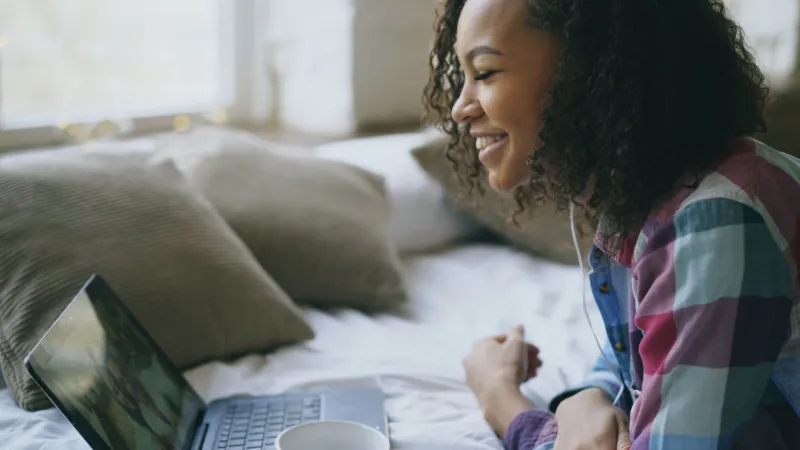
Somewhere in Ohio, a 19-year-old named Maya is having an argument with her mom — in Spanish. Not textbook Spanish. Not the kind she half-learned in three years of high school classes. The kind she picked up watching reggaeton music videos, rewinding TikToks, and binge-watching La Casa de Papel with subtitles she eventually stopped needing. She didn't study. She just watched. A lot.
This is happening everywhere, and language educators are equal parts baffled and thrilled about it.
The Classroom Problem Nobody Wanted to Name
Here's the thing about traditional language education in the US: it kind of doesn't work. Not for most people, anyway. Decades of studies have backed this up, and anyone who took four years of French and can only order a croissant knows it firsthand. The problem isn't the teachers. It's the format. Conjugation charts, vocabulary quizzes, and grammar drills are optimized for passing tests — not for wiring your brain to actually use a language.
Dr. Patricia Osei, a linguistics professor at a mid-sized university in the Pacific Northwest, puts it plainly: "Traditional instruction gives you the skeleton of a language. But you need flesh, context, emotion. You need to care about what's being said. A classroom rarely gives you that."
What gives you that, apparently, is a really good plot twist at 2 a.m.
Dopamine Is a Better Teacher Than Homework
Neuroscience has a lot to say about why entertainment-driven language acquisition works so well. When you're emotionally invested in a story — when you genuinely need to know whether the main character survives, whether the couple gets together, whether the villain gets caught — your brain is flooded with dopamine. And dopamine, among its many jobs, tags experiences as worth remembering.
Language attached to emotional context gets stored differently than language attached to a worksheet. It goes deeper. It sticks.
"We've known for a long time that emotional salience improves memory consolidation," says Dr. James Rhee, a cognitive neuroscientist who's been studying media consumption habits in young adults. "What's new is the scale. We've never had a generation exposed to this much emotionally rich foreign-language content, this consistently, this voluntarily. The language learning happening passively right now is genuinely unprecedented."
The key word there is voluntarily. Nobody is forcing Maya to watch Spanish-language content. She's doing it because she wants to. And that intrinsic motivation, researchers say, is one of the most powerful predictors of language retention.
K-Drama as Curriculum
Ask any American who's deep into Korean dramas how much Korean they've picked up and watch their face do something complicated. There's usually a pause, a half-laugh, and then something like: "More than I expected? Like, a lot more."
They know annyeong. They know oppa. But they also know the cadence of apologies, the specific phrasing of formal versus informal speech, the way certain words feel softer or sharper depending on who's saying them. They may not be able to write a sentence, but they can hear the language in a way that feels intuitive.
That's not nothing. That's actually the foundation of what linguists call receptive competence — the ability to understand a language even before you can produce it. And it's the same foundation that bilingual children build on naturally.
Jade, a 22-year-old from Atlanta who started watching K-dramas at 15, took a beginner Korean class in college and was stunned. "The professor would play audio clips and ask us to identify tones or repeat phrases. And I kept thinking, I already know this. Not from studying. Just from watching so much that it got into my head."
Reggaeton, TikTok, and the Audio Classroom You Didn't Know You Were Attending
Music is doing something similar, just faster. Reggaeton's dominance on American charts over the past decade has quietly introduced millions of English-speaking listeners to Spanish vocabulary, rhythm, and even slang. People who would never describe themselves as Spanish learners can sing along to Bad Bunny without a translation guide. They know what perreo means. They know the difference between tú and usted from context. They feel the meaning before they can explain it.
TikTok accelerates all of this. The platform's algorithm doesn't care what language a video is in — it cares whether you watch it to the end. So American users regularly end up deep in corners of the app where French, Portuguese, Hindi, Turkish, and Tagalog content lives. They watch, they rewatch, they comment with the few words they've absorbed, and the algorithm feeds them more. It's an immersion environment built accidentally by an engagement-optimization machine.
"TikTok might be doing more for language exposure in this country than any government program ever has," Dr. Osei says, only half-joking.
The Limits of the Couch
None of this means you can replace a language class entirely with a Netflix subscription. Passive exposure has real ceilings. Grammar structure, writing, and formal production skills don't emerge from watching alone — they need some scaffolding. And there's a gap between recognizing a word and being able to use it under pressure in a real conversation.
But language educators are increasingly arguing that entertainment should be the entry point, not the supplementary material. Start with the thing that makes someone care about the language. Let the emotional investment do the heavy lifting. Then formalize it later, once the brain is already primed and curious.
Some language apps and tutors are already leaning into this. Programs built around TV show episodes, song lyrics, and social media content are outperforming traditional textbook-based apps in retention studies. The methodology isn't revolutionary — immersion has always been considered the gold standard for language learning. What's changed is that immersion is now available on demand, for free, at any hour, in almost any language.
Something Is Being Built Without Anyone Noticing
What's quietly happening in living rooms and on phone screens across America is a kind of cultural rewiring. A generation is growing up with at least a working familiarity with the sounds, rhythms, and emotional textures of languages their parents never heard. They may not be fluent. But they're not foreign to it, either.
Maya, back in Ohio, puts it the best way she can: "I don't know if I speak Spanish. But I understand it. Like, I feel it. That has to count for something."
It counts for more than she knows.