Glass Skin, Cottagecore Coords, and a Whole New Alphabet: How East Asian Aesthetics Became the Way Young Americans Speak About Themselves
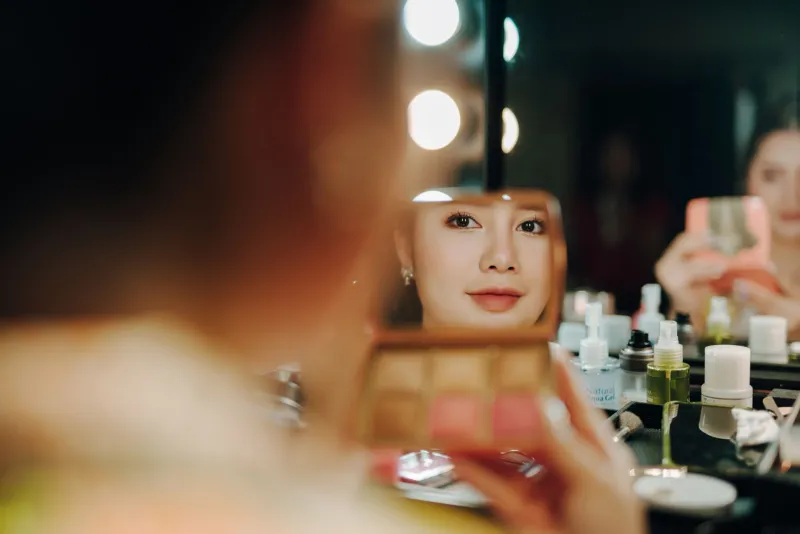
There's a very specific feeling that hits when you finally nail your base — when the tinted sunscreen sits right, the cushion compact catches the light exactly the way you wanted, and your skin looks less like makeup and more like you, but somehow better. If you know that feeling, you probably also know the Korean brand names that got you there. And if you know those, chances are you've fallen down at least one rabbit hole that ended somewhere around 2 a.m. with you watching a Seoul-based beauty streamer explain the difference between essence and serum in a language you don't fully speak — and somehow understanding every word.
That's the thing about what's happening with K-beauty and J-fashion in America right now. It's not really about skincare routines or pleated skirts or the perfect shade of sheer gloss. It's about a new kind of fluency — one that doesn't require a dictionary.
More Than a Trend Cycle
Fashion and beauty have always borrowed from everywhere. That's not new. What is new is the depth of engagement that young Americans are bringing to East Asian aesthetics specifically. We're not talking about a single viral product or a runway moment that disappears by next season. We're talking about an entire visual grammar — a set of codes that, once you learn them, unlock membership in something that feels genuinely global.
The Korean concept of chok-chok (that dewy, almost luminous skin texture) didn't just sell serums. It introduced a whole philosophy about what beauty is supposed to feel like — less armor, more second skin. Japanese fashion subcultures — Harajuku layers, Mori girl softness, the clean geometry of contemporary Shibuya streetwear — didn't just change what people were putting in their online shopping carts. They offered entire worldviews dressed up in fabric and silhouette.
For a generation that grew up being told their personal brand matters more than almost anything, these aesthetics arrived like a gift. They were specific enough to feel intentional, layered enough to reward curiosity, and visual enough to travel instantly across platforms where language is basically optional.
The Passport Nobody Stamps
Here's where it gets interesting. Ask someone deep in the K-beauty world how they got there, and the answer almost never starts with skincare. It starts with a drama they stumbled onto, or a song that showed up in their For You page, or an anime that a friend recommended years ago. The beauty content came in between — a gateway that didn't feel like a gateway at all.
That's the structure of it. These aesthetics function as entry points into much larger entertainment ecosystems. You buy the sunscreen because you saw it on a YouTube channel run by a Korean content creator. You keep watching that channel. You start recognizing references to shows, to music, to webtoons you haven't read yet. You follow those threads. Suddenly you're three seasons into a drama, you've got a playlist full of artists you can't name-drop at a dinner party without getting blank stares, and you're reading a manhwa on your lunch break.
The aesthetic was the door. Everything behind it is the house.
Visual Storytelling That Doesn't Need Subtitles
One of the reasons this whole ecosystem travels so well is that so much of it communicates visually first. A Korean beauty tutorial doesn't need a perfect English voiceover to be useful — the hands move, the products appear, the transformation happens in front of you. A J-fashion lookbook is basically a mood board that breathes. The Harajuku aesthetic or the soft, earthy palette of a Mori girl outfit tells you something about a person's entire inner world without requiring a single sentence.
This is the kind of content that platforms like TikTok and YouTube were practically designed to carry. Short-form beauty content from Korean and Japanese creators racks up massive American audiences not despite the language difference but almost because of it — there's something that feels more authentic, less performed, about watching someone in Seoul do their morning routine in Korean with maybe a few English captions sprinkled in. The visual language does the heavy lifting.
And for a generation that grew up on anime — where visual storytelling has always been the whole point — this is completely intuitive. The leap from watching Your Lie in April cry you to pieces to caring deeply about a Japanese fashion aesthetic is shorter than you might think. Both are asking you to read the image, to feel the frame, to let the visual do the emotional work.
Belonging Without a Boarding Pass
There's also something worth saying about what it means to adopt these aesthetics in an American context. Critics sometimes frame it as appropriation-lite, a surface-level cosplay of cultures that aren't yours. And that's a conversation worth having carefully. But the reality on the ground — in comment sections, in Discord servers, in the TikTok beauty community — looks a lot more like genuine exchange than extraction.
Young Americans who go deep on K-beauty are often among the most vocal advocates for Korean artists, Korean cinema, Korean food, Korean everything. The aesthetic becomes a kind of loyalty that extends outward. It's a community with real stakes — people who feel genuinely connected to a cultural world they didn't grow up in, who learn about it because they first learned from it.
That's not nothing. In a media landscape where so much content is algorithmically sealed into national bubbles, these aesthetic communities are doing something genuinely cross-cultural — building shared references across continents, finding common ground in a shade of lip tint or the way a collar sits.
What It Sounds Like When a Look Speaks
If you want to understand where American culture is actually moving — not where the think pieces say it's going, but where kids are actually putting their attention and their money and their identity — you could do worse than to spend an afternoon in the K-beauty aisle of a Sephora, or scrolling through the J-fashion tags on any major platform.
What you'll find isn't imitation. It's interpretation. It's a generation that learned a new visual language, started speaking it fluently, and is now using it to say something distinctly their own.
The aesthetic empire isn't being built in Seoul or Tokyo alone. It's being assembled, piece by piece, in bedrooms across America — one essence layer, one pleated skirt, one rabbit hole at a time.